


Monster Horde: Hide and Seek
3.349.00 Reviews
App Specs
- Version
- 1.8.10
- Updated On
- License
- Free
- Downloads
- 10,000,000+
- Developer
- CASUAL AZUR GAMES
- Categories
- Arcade
- Platform
- Android, iOS
Screenshots
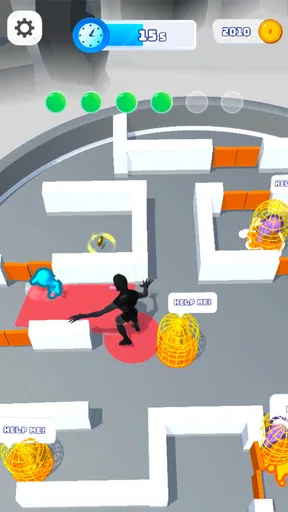

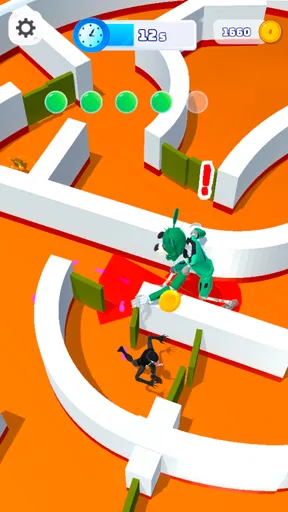




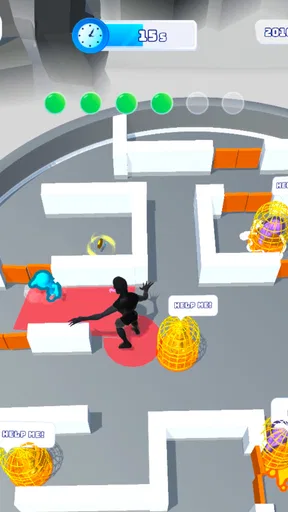
 Analysis by AppCompare
I spent time with Monster Horde: Hide and Seek as a quick arcade game built around a simple but effective idea: one side hides while a monster searches, and the fun comes from turning that familiar playground game into a more hectic chase. It is easy to understand within moments, but the short rounds encourage repeated attempts, especially when I wanted something lighter than a long campaign or a strategy game that demands full concentration.
Developed by CASUAL AZUR GAMES, this free game sits in the arcade category and is aimed at Teen players. Its central appeal is not a complicated story or a deep collection of systems. Instead, it focuses on immediate movement, visual reactions, and the satisfaction of catching people before they can stay hidden. That makes it a natural fit for brief sessions, although the same simplicity may feel limiting if you are looking for a substantial single-player adventure.
How the chase feels in everyday play
The first thing I noticed is how quickly the game gets to its main activity. There is no need to learn a large set of rules before playing. You enter a hide-and-seek scenario, read the space around you, and react to the movement of the other characters. The monster theme gives the familiar game a more cartoonish arcade identity, while the basic chase structure keeps the action understandable for younger and older players alike.
In practical terms, it works well when I have only a few minutes. I can play during a short break, finish a round, and put the phone away without feeling that I have abandoned a long mission. That convenience is one of its strongest qualities. A game like this does not ask me to remember a detailed plot or rebuild a complicated plan after an interruption.
The pace is generally perceived as brisk because the objective is immediately visible. I am either trying to avoid being found or trying to catch the hidden characters, so there is little downtime between deciding what to do and seeing the result. The experience is more about quick choices than careful long-term planning. Players who enjoy arcade games with a clear loop will probably appreciate that directness.
At the same time, the speed can expose the limits of the design. Once the basic chase pattern becomes familiar, the novelty depends heavily on how much variety the individual situations provide. I would not approach this expecting the layered progression of a large action game. Its strength is the short burst, not a massive journey with many different play styles.
What happens when the screen gets busy
The most demanding moments are the ones in which several characters are moving, hiding, or changing direction at once. Those scenes require me to stop looking only at the monster and pay attention to the wider space. A rushed approach can send me past a target or leave me searching the wrong area, so the best results come from combining speed with a little observation.
Worth Reading Before You Choose

EA SPORTS FC Mobile 26 Is a Bigger Football Game, but It Takes Time

Flipboard Shows What News Apps Must Do Beyond the Feed

Switching to Android Auto Means Rethinking Your Driving Routine

Google Calendar Makes a Crowded Week Easier to Manage

Ludo King Makes the Most of the Minutes Between Plans

Baby Panda World Brings Quick Play to Modern Phones, but Its Game Library Feels Busy
One useful habit is to avoid moving randomly as soon as a chase begins. I get more from the game when I first identify likely hiding areas and then use the movement of the characters as clues. This is a small but meaningful difference: the game may look like pure running, yet patience can make a short round easier to control. It also prevents the experience from becoming nothing more than repeated tapping or swiping without thought.
When I am playing as the monster, I try to cover the most useful routes rather than chase the nearest visible figure forever. A target that looks close can lead me away from the rest of the play area. When I am trying to stay hidden, I think about visibility and timing instead of treating every open space as equally safe. These choices are not advanced mechanics, but they add a little decision-making to an otherwise straightforward arcade loop.
Heavy-use moments also reveal the difference between a relaxing session and a frustrating one. If I play repeatedly without a break, the same basic objective can begin to feel predictable. The game is better suited to rotating through short sessions than to an extended marathon. That is not a technical fault, but it is an important trade-off for anyone deciding whether this should become a main game rather than a casual extra.
Stability, interruptions, and getting back into a round
For a game designed around short attempts, recovery matters almost as much as the chase itself. I value being able to return to the action without having to reconstruct a complicated state in my head. Monster Horde: Hide and Seek benefits from its compact concept here: even when I stop playing, the overall goal remains easy to remember.
I would still recommend treating it as a session-based game rather than assuming every interruption will feel invisible. Phone calls, app switching, or a low-battery moment can break the rhythm of any mobile game. The shorter structure makes that less painful than losing progress in a lengthy role-playing game, but it does not remove the annoyance of having a good chase interrupted at the wrong time.
Its broad adoption suggests that it has found an audience beyond a tiny niche. The game has passed 10 million installs, while its average stands at 3.3 from roughly 3.9 thousand ratings. I read that combination as a sign of curiosity and reach rather than a guarantee that every player will enjoy it. The concept is easy to understand, but the moderate reception also fits my impression that the simple loop will appeal strongly to some people and feel repetitive to others.
The current release is version 1.8.10. For me, that makes it sensible to use the latest available build when judging the experience, especially because mobile games can change their feel through updates. I would not base a decision only on the version number, though. The more important question is whether I want a compact hide-and-seek arcade loop in the first place.
Phone limits and practical expectations
The stated minimum operating-system requirement is Android 7.1, which gives the game a relatively broad compatibility window for Android users. That is useful if I am playing on an older phone rather than a recent flagship. Still, an operating-system requirement alone does not tell me exactly how every device will behave. Age, available storage, background activity, and general condition can all affect how comfortable a game feels during play.
I would expect the most comfortable experience from a phone that is kept reasonably clear of demanding background tasks. Before a longer session, closing unnecessary apps and making sure the device is not already struggling with heat is a sensible routine. I am not treating that as a special requirement of this title; it is simply a practical way to protect responsiveness in any fast-moving mobile game.
Perceived speed is especially important here because the game depends on reacting to movement. A small delay can make a chase feel less fair, even when the game itself is working as intended. If the controls feel inconsistent on an older device, lowering general device workload is worth trying before deciding that the game is unusable. Players with very old or heavily burdened phones should keep their expectations modest.
Resource demands are also easier to tolerate because the game is designed for short arcade sessions rather than long continuous play. I would be more cautious about extended use while the phone is already warm or low on power. The sensible approach is to treat it as a quick entertainment option, not as something to leave running in the background for hours.
On iOS, the practical decision is similar even though the listed minimum requirement is expressed for Android. I would focus on whether the device handles current games comfortably and whether I have enough room for another free title. The important point is that the game’s appeal comes from responsiveness, so a device that regularly struggles with mobile software will reduce the fun no matter how simple the rules appear.
Free to start, with a cost worth considering
The game is free to download, which makes it easy to test without committing money at the beginning. That is a good match for its arcade format: I can quickly discover whether the hide-and-seek loop works for me, then decide whether it deserves a permanent place on my phone.
There are in-app purchases ranging from $0.99 to $94.99 per item. That spread is worth taking seriously, particularly for families sharing a device or for anyone who prefers games with no additional spending. I would recommend checking purchase controls before handing the phone to a child, even though the content rating is Teen. Free entry is convenient, but it should not be confused with a completely cost-free experience.
My advice is to play enough ordinary rounds to judge the core loop before considering any purchase. If the basic chase is already becoming repetitive, spending money is unlikely to solve that underlying issue. If I enjoy the game in short bursts and simply want optional extras, then the decision becomes more personal, but I would still set a firm budget first.
Who will enjoy it, and who should choose something else
I think this is a good choice for players who want immediate arcade action, recognizable rules, and rounds that fit naturally into spare moments. It can also work as a casual game to share with someone who does not usually play complex mobile titles. The monster-versus-hiders setup gives the concept a clear identity without requiring a long tutorial or a detailed knowledge of gaming conventions.
It is less suitable for someone searching for a deep competitive system, a strong narrative, or a game that changes dramatically from one session to the next. Players who prefer puzzle games may find the decisions too movement-focused, while fans of large action adventures may run out of reasons to continue once the initial surprise fades.
Compared with a traditional hide-and-seek game, it offers the convenience of playing alone on a phone and adds a monster-themed arcade frame. Compared with endless runners, it gives me more reason to watch the environment and think about where characters may be hiding instead of simply surviving as long as possible. Compared with multiplayer party games, it is easier to start quickly, but it may not provide the same social energy or variety that comes from playing directly with friends.
That comparison helps define its place. I would choose this over a more demanding game when I want a quick chase with almost no preparation. I would choose a puzzle game when I want calm concentration, an endless runner when I want constant forward motion, and a social party title when interaction with other people matters more than the monster theme.
My practical verdict after repeated short sessions
Monster Horde: Hide and Seek works because it understands the value of a simple idea that can begin immediately. The monster role, the hiding behavior, and the need to read the space give the arcade format enough personality to stand apart from a basic running game. I enjoyed it most when I treated each attempt as a compact challenge rather than expecting a large progression system.
Its main weakness is equally clear: the central loop may not have enough depth for long sessions. The moderate average rating reflects why this can be a divisive download. Players who want fast, accessible rounds may find it entertaining, while players who need extensive variety may see the same simplicity as repetition.
For everyday use, I would install it on a compatible phone, try several short sessions, and judge the controls during the busiest chases rather than after only one easy round. I would also review purchase settings before letting a younger player use it and avoid spending until the free experience has proved its staying power.
My final view is positive but measured. This is a convenient arcade game for quick monster-and-hider action, not a replacement for a deeper adventure or a full social party experience. If you enjoy hide-and-seek ideas, like reacting to moving targets, and prefer games that are easy to resume after a break, it is worth trying. If you need rich progression, extensive strategy, or a long-lasting campaign, I would point you toward a different kind of game.
The best way to approach it is as a short, responsive diversion: play with attention, take advantage of the environment, keep sessions manageable, and decide on purchases only after the basic chase has earned your time.
Pros
- Simple controls make it easy to start playing immediately.
- Short rounds fit well into quick gaming sessions.
- Hide-and-seek gameplay creates fun moments of tension.
- Bright visuals make characters and objectives easy to recognize.
- Different roles offer variety between matches.
Cons
- Gameplay may feel repetitive after several rounds.
- Some levels can seem unbalanced between hiders and seekers.
- Ads may interrupt the experience for free players.
- Limited customization reduces long-term personalization.
- Performance may drop on older or less powerful devices.
FAQs for Monster Horde: Hide and Seek
What is Monster Horde: Hide and Seek?
Monster Horde: Hide and Seek is a casual multiplayer-style game built around the classic hide-and-seek concept. Depending on the role assigned, you either hide from dangerous monsters and try to survive, or search the map and catch the hidden players. Matches are designed to be easy to understand, with short rounds, simple objectives, and fast-paced action suitable for quick gaming sessions.
How do you play Monster Horde: Hide and Seek?
At the beginning of each round, you are generally placed in a hiding or seeking role. Hiders must explore the environment, find a safe location, and avoid being discovered until the timer ends. Seekers or monsters must patrol the area, identify suspicious hiding spots, and capture opponents. Learning the map, moving carefully, and reacting quickly are important for completing each round successfully.
Is Monster Horde: Hide and Seek suitable for children?
The game uses a playful cartoon presentation rather than realistic horror, which makes it more approachable for younger players and casual audiences. However, it still includes monster chasing, capture mechanics, and suspenseful moments. Parents should check the game’s age rating, advertising, in-app purchase options, and any online or social features available on the specific Android or iOS version before allowing children to play.
Does Monster Horde: Hide and Seek require an internet connection?
The connection requirements can depend on the version and features provided by the developer. Some gameplay elements may work without a constant connection, while advertisements, updates, cloud features, or online components may require internet access. Before downloading, check the official Google Play or App Store listing for the latest information, especially if you plan to play while traveling or with limited mobile data.
Is Monster Horde: Hide and Seek free to download and play?
Monster Horde: Hide and Seek may be available as a free download, but free access does not always mean that every feature is completely unrestricted. The game can include advertisements, optional purchases, rewarded videos, or other monetization elements. We recommend reviewing the store listing and purchase settings before installing it, particularly if the device is shared with children or if you want to avoid unexpected charges.


